
5 Domino Games That Secretly Teach Early Maths
We picked up a set of dominoes cheaply at a charity shop, and it turned out to be one of the best few pounds we've spent on early maths. No printing, no prep, no special resources, just a battered old tin. We pulled it out on a whim one afternoon and ended up with five completely different games, all from the same set.
Why dominoes work so well for early maths
Each tile is a tiny maths problem waiting to happen. The dots can be matched, counted, added, or compared, and because it's a game rather than a task, your child stays engaged for far longer than you'd expect. Here's what we played.
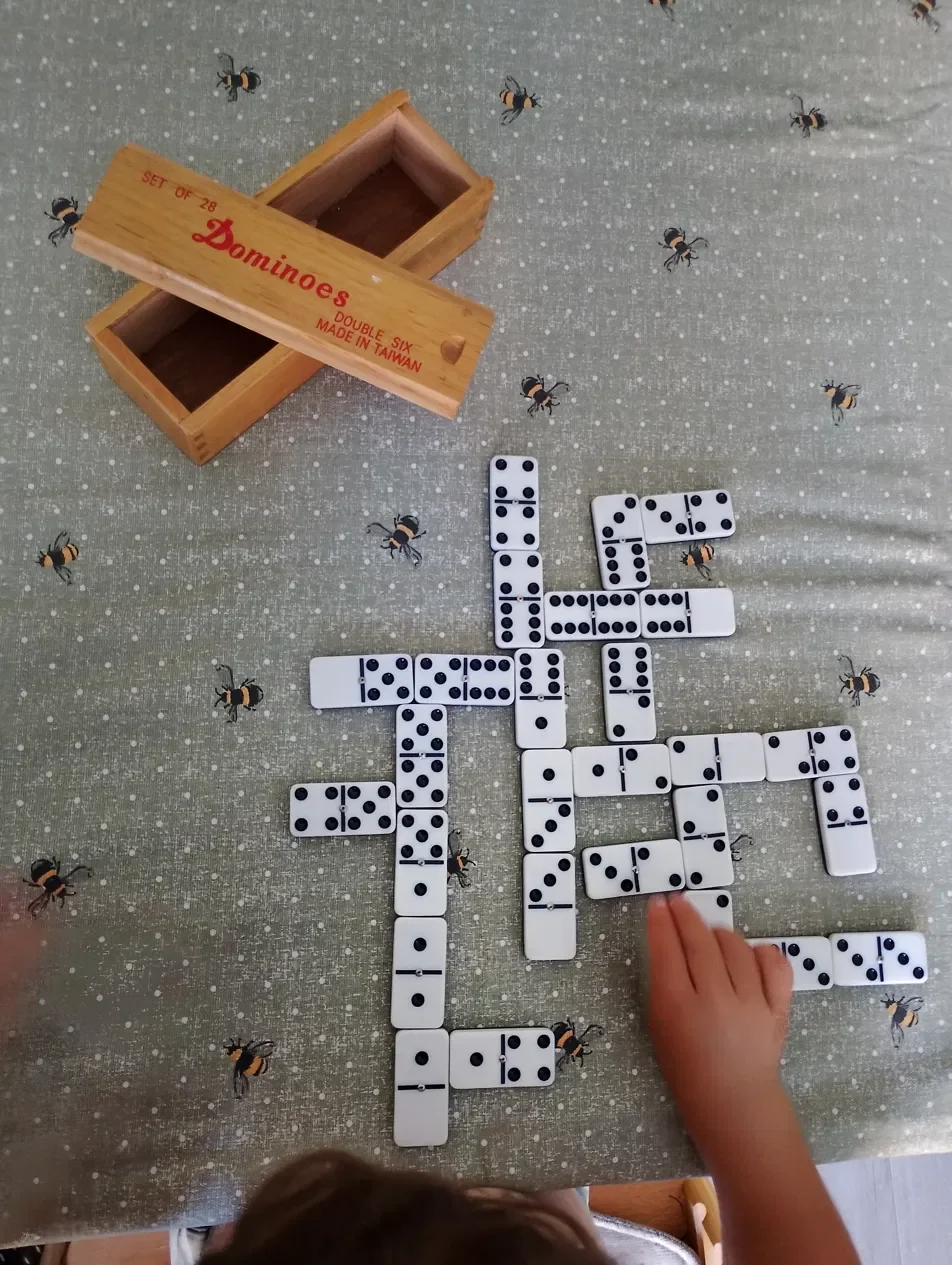
1. Matching the numbers
The classic way to play. Line the tiles up end to end so the matching numbers touch, and watch the trail snake across the table or floor. It's a simple start, but it's doing more than it looks like, your child is comparing quantities and spotting patterns with every tile they place.
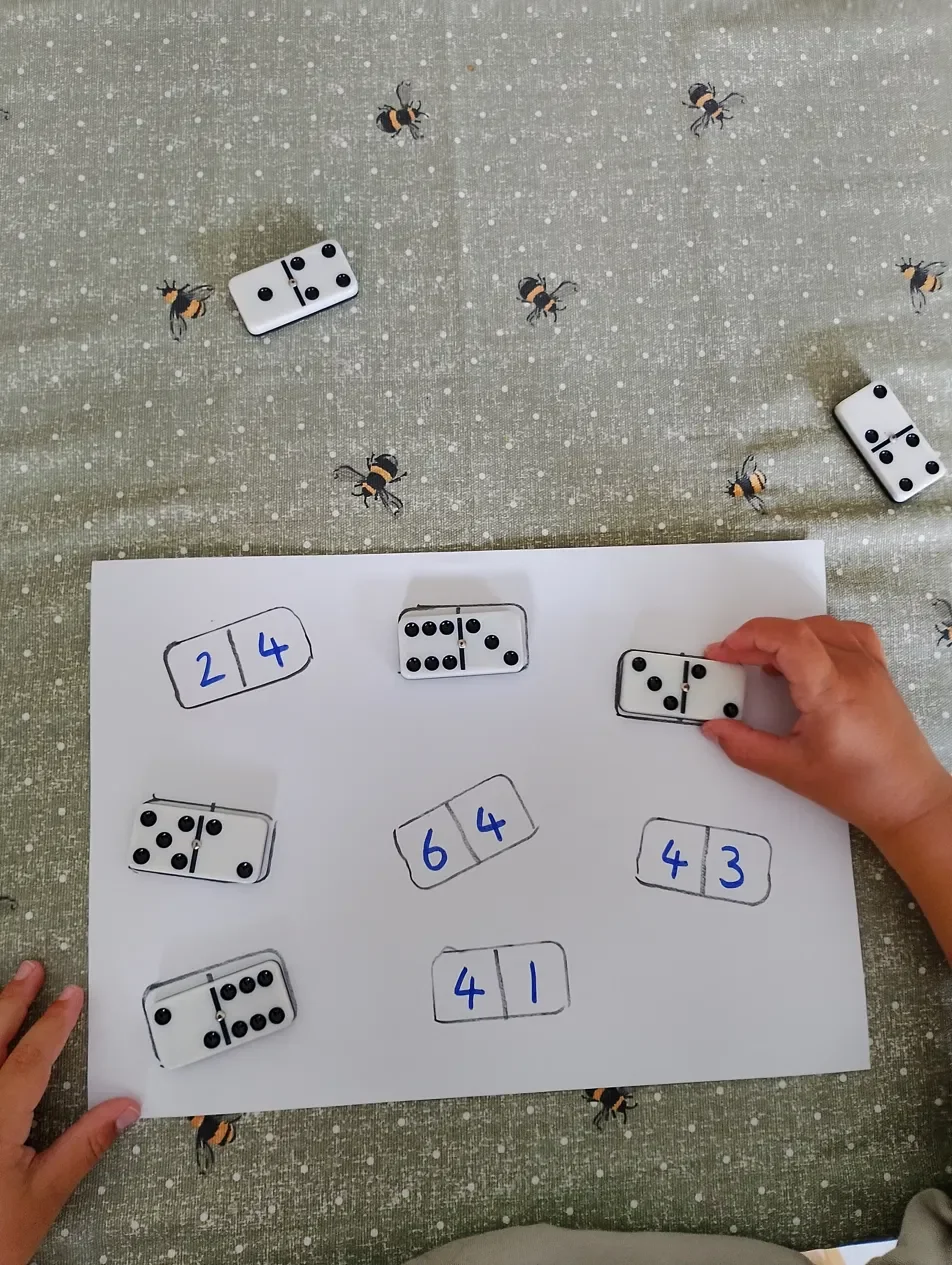
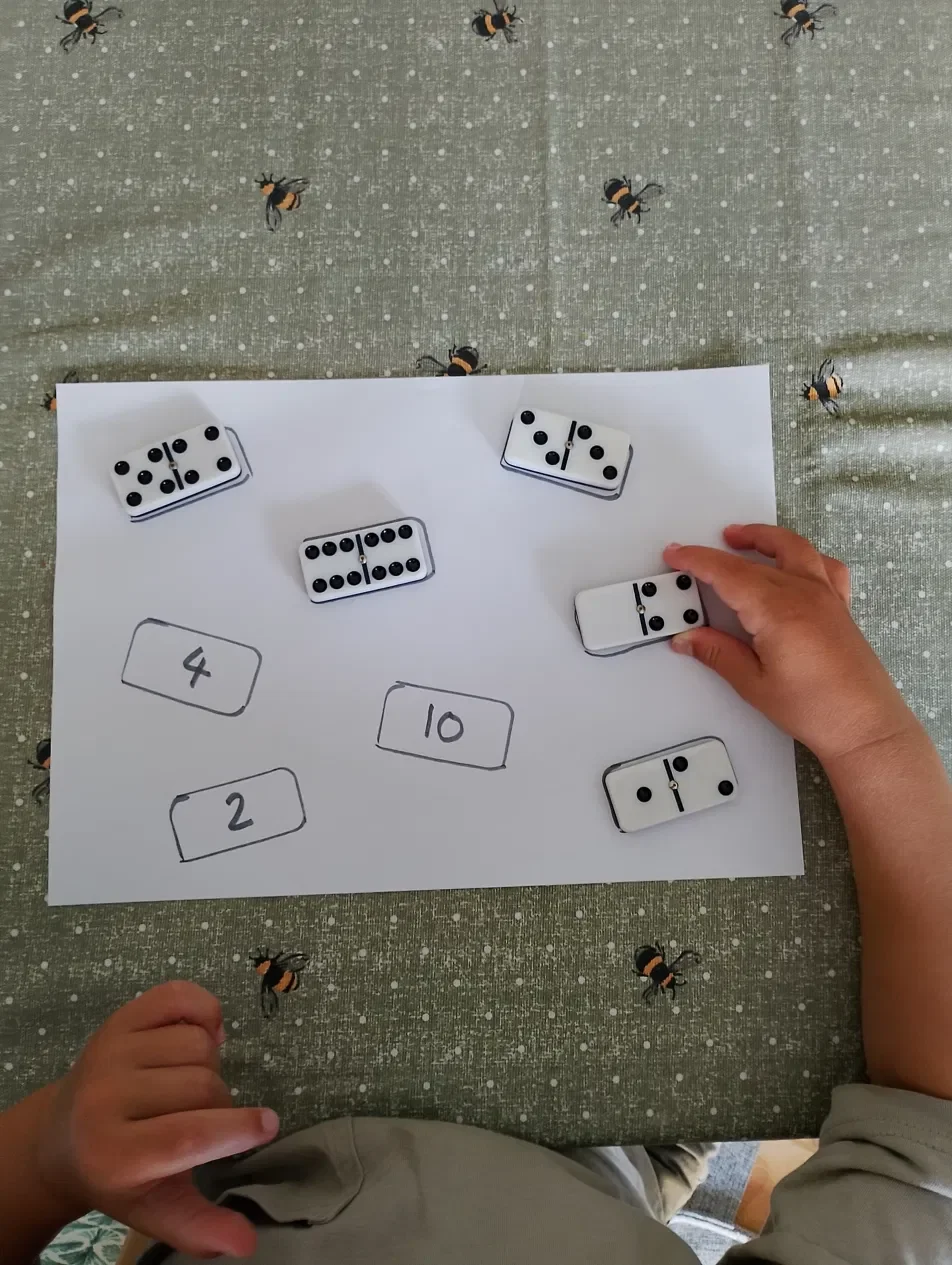
2. Match the tile to the numeral
Draw a few domino outlines on paper and write a numeral inside each one, then hand your child the matching tiles to place on top. This bridges the gap between seeing a quantity and recognising the written number, a small step that makes a big difference later on.
3. Add the dots, find the total
Write a few totals on paper, then set your child loose on the tin to find dominoes whose dots add up to match. It's proper addition, just dressed up as a hunt rather than a sum on a page.
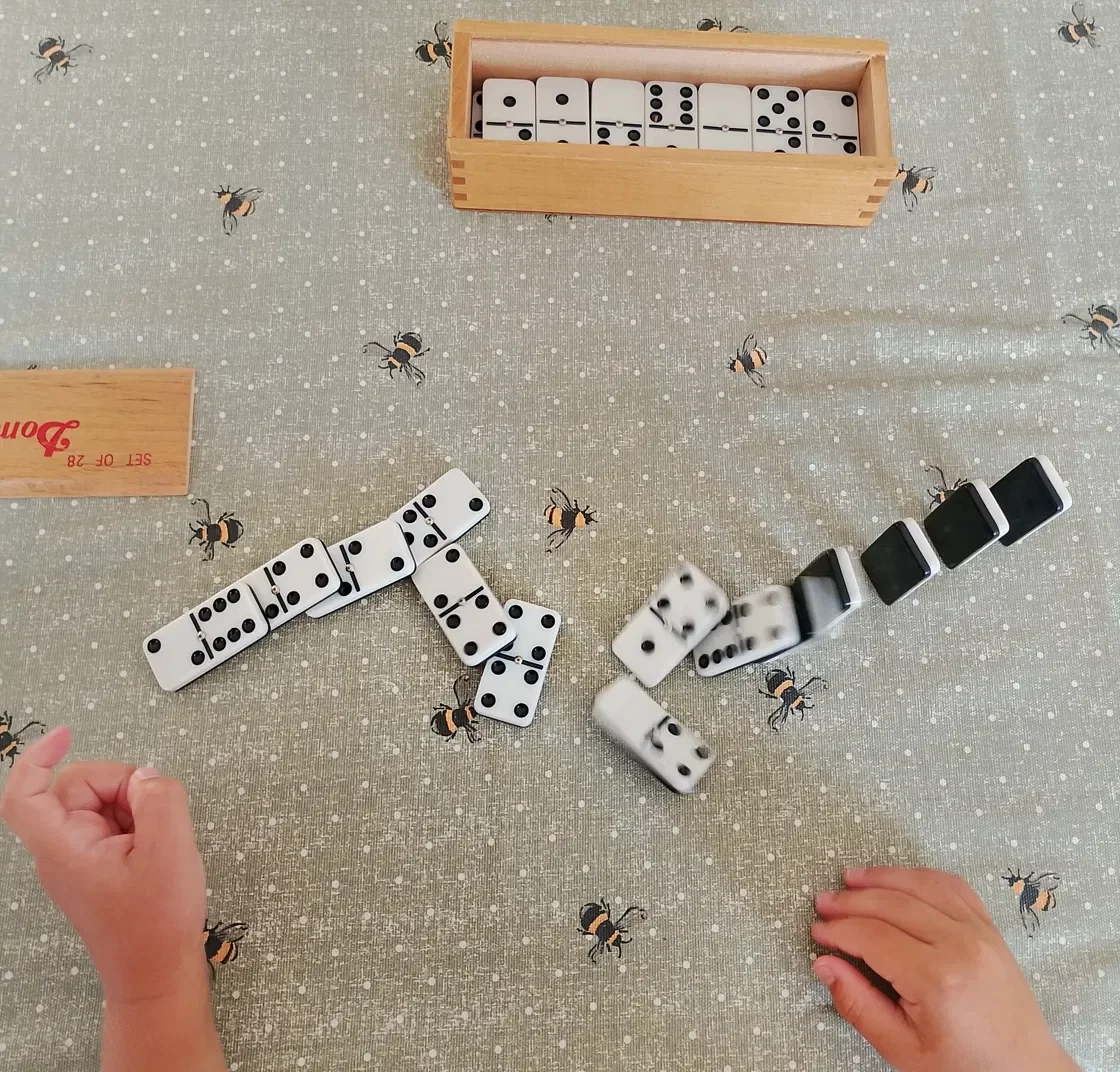
4. Build it up, knock it down
Stand the tiles on end in a line and watch them fall. Beyond the sheer fun of it, this is cause and effect and fine motor control in one go, standing a domino upright takes more concentration than it looks like.
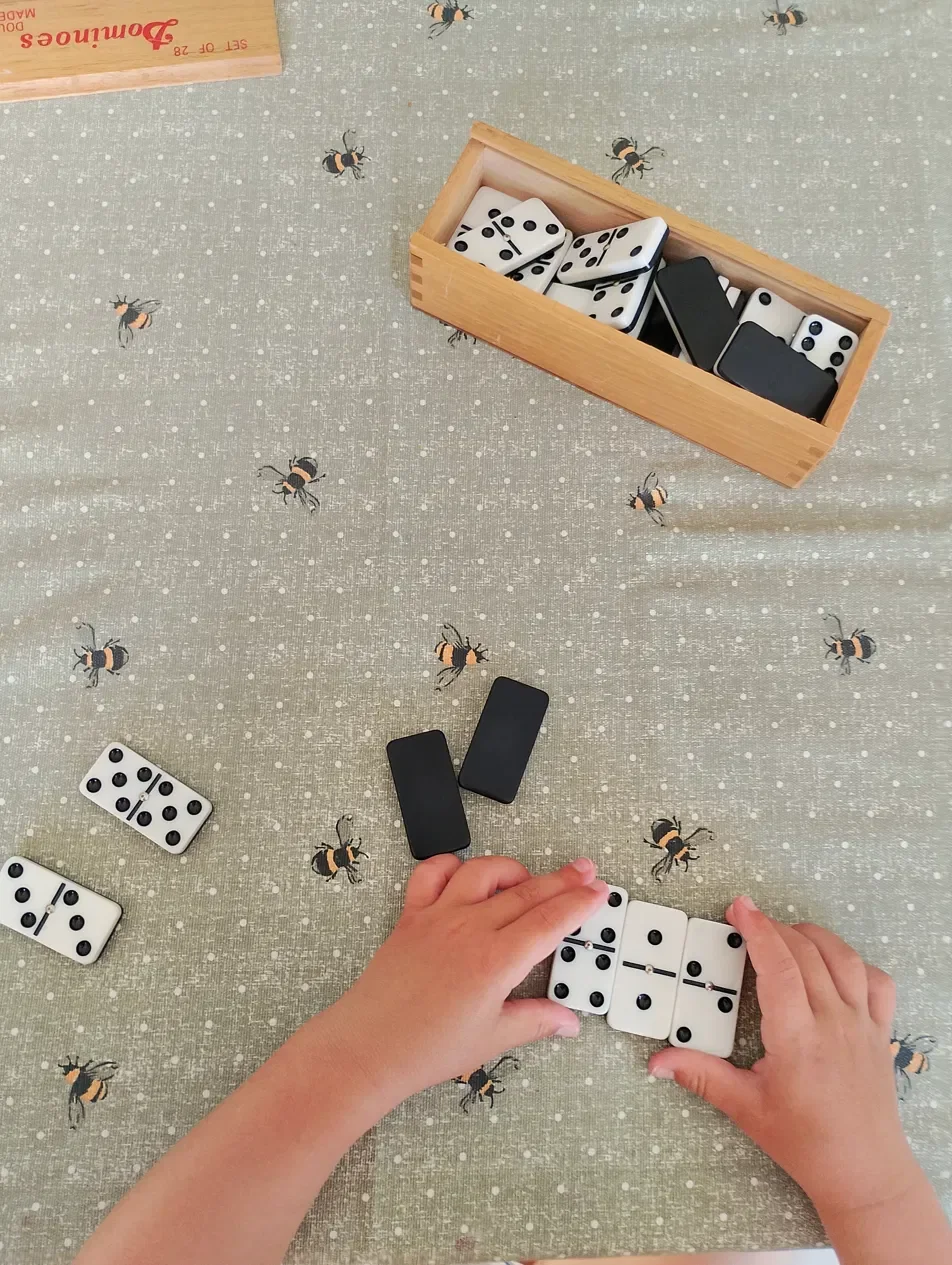
5. The doubles hunt
Turn the tiles face down and flip them one at a time, keeping any where both sides match. This one quietly builds number recognition and a bit of memory too, and it's genuinely exciting when a double turns up.
The maths hiding in plain sight
Watch closely during the matching game and you'll probably notice your child isn't counting every dot, they're glancing at the pattern and just knowing it's a five, or a three. That's called subitising, and it's one of the earliest and most important number skills a child builds, well before they can count reliably out loud.
The bottom line
You don't need a workbook to build real maths skills at this age, just a set of dominoes and a bit of time. Start with whichever game your child seems drawn to, and let the rest follow.
30 play-based activities designed to build number sense, counting and early addition through everyday play. Low prep, no worksheets, just play.
Play Nest Learning creates playful, beautifully designed activity packs that help children learn through play. Because home learning should feel joyful, not stressful.