Your Child Knows Every Letter Sound But Can't Read Words
Your child can point to any letter and tell you its sound without hesitation. Then you put three of those letters together into a word, and nothing happens. No frustration, exactly, just a blank pause, like the letters and the word are two separate things that haven't met yet.
It's not a knowledge gap. It's a blending gap.
Knowing individual sounds and blending them into a word are two completely different skills, and a lot of parents assume the second one follows automatically from the first. It doesn't. Blending is the skill of holding several sounds in your head at once and pushing them together fast enough that they turn into a word you recognise, c, a, t becomes cat. That takes practice on its own, separate from learning the sounds themselves.
Words like this, made up of three simple sounds such as cat, top and mat, are called CVC words, short for consonant, vowel, consonant. They're usually the first words a child learns to blend, and they're the words this whole approach is built around.
The good news is that blending is a skill you can build through a simple, playful activity.
Start with blending out loud
Before your child ever blends a word on paper, they need to hear it done out loud, over and over, in moments that have nothing to do with sitting down to read. This is where a silly robot voice earns its keep.
Say ordinary instructions in broken up sounds throughout the day and let your child blend them back together.
Can you put on your t-o-p? Can you get the toy from the m-a-t?
They'll blend the word in their head to work out what you're asking, which is exactly the skill they'll need later wrapped up as a game.
Once this feels easy and automatic, moving to written words is a much smaller step, because the blending itself is already familiar.
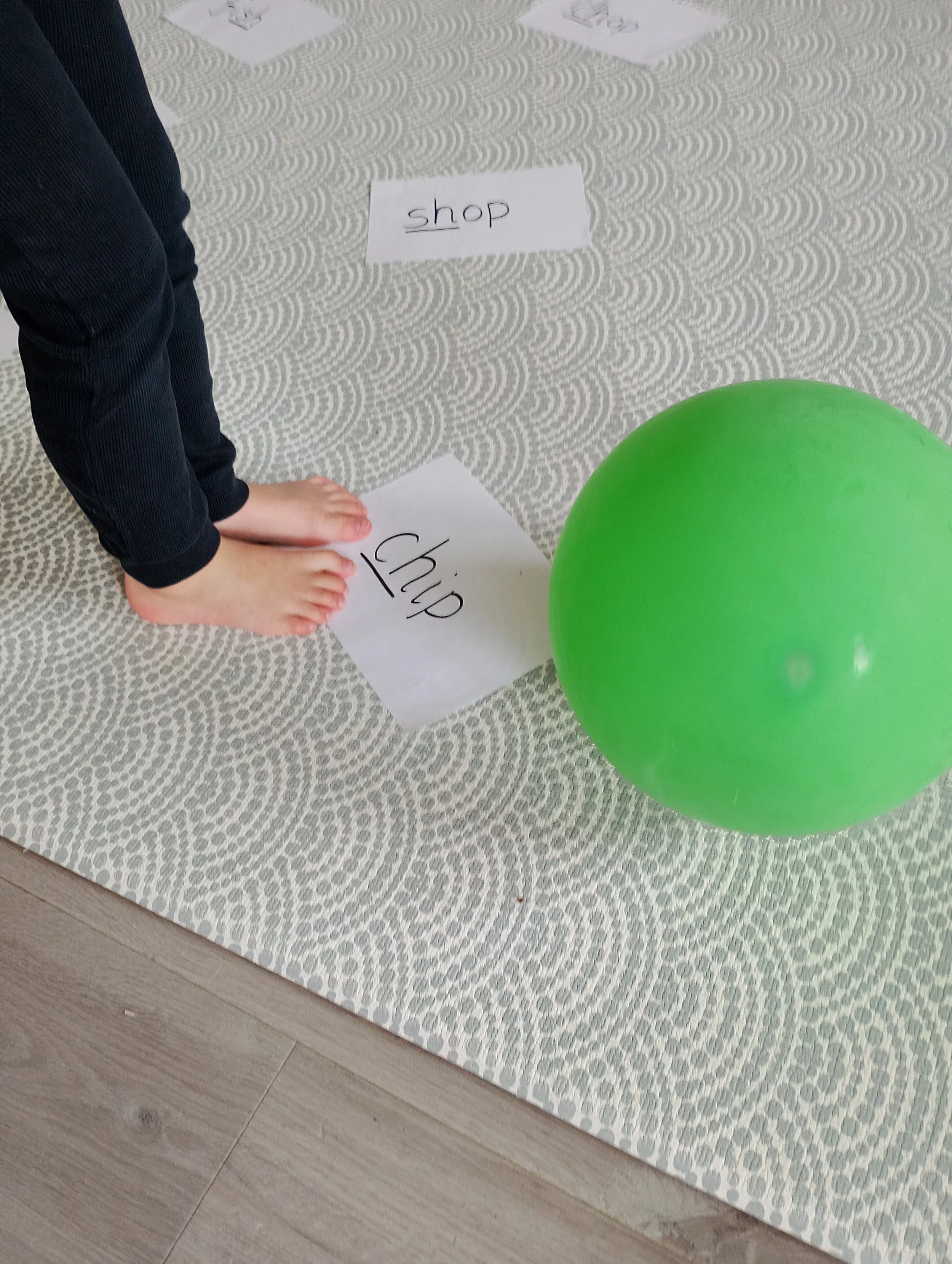
Two simple ways to practise reading those first words.
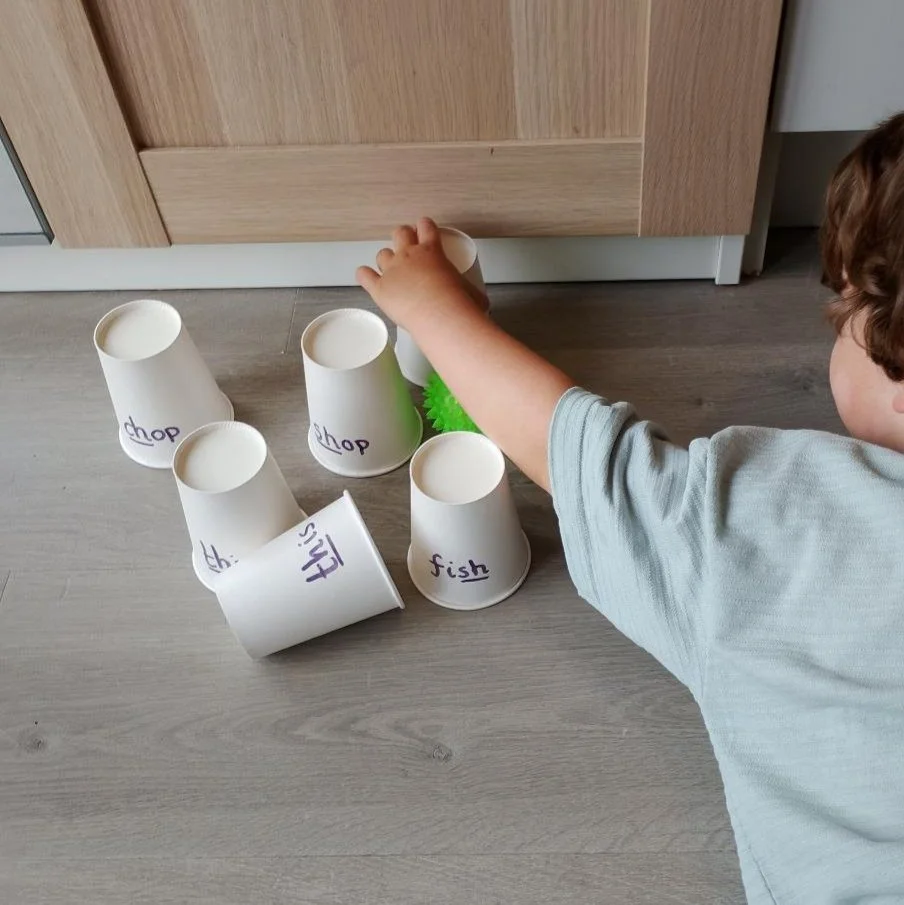
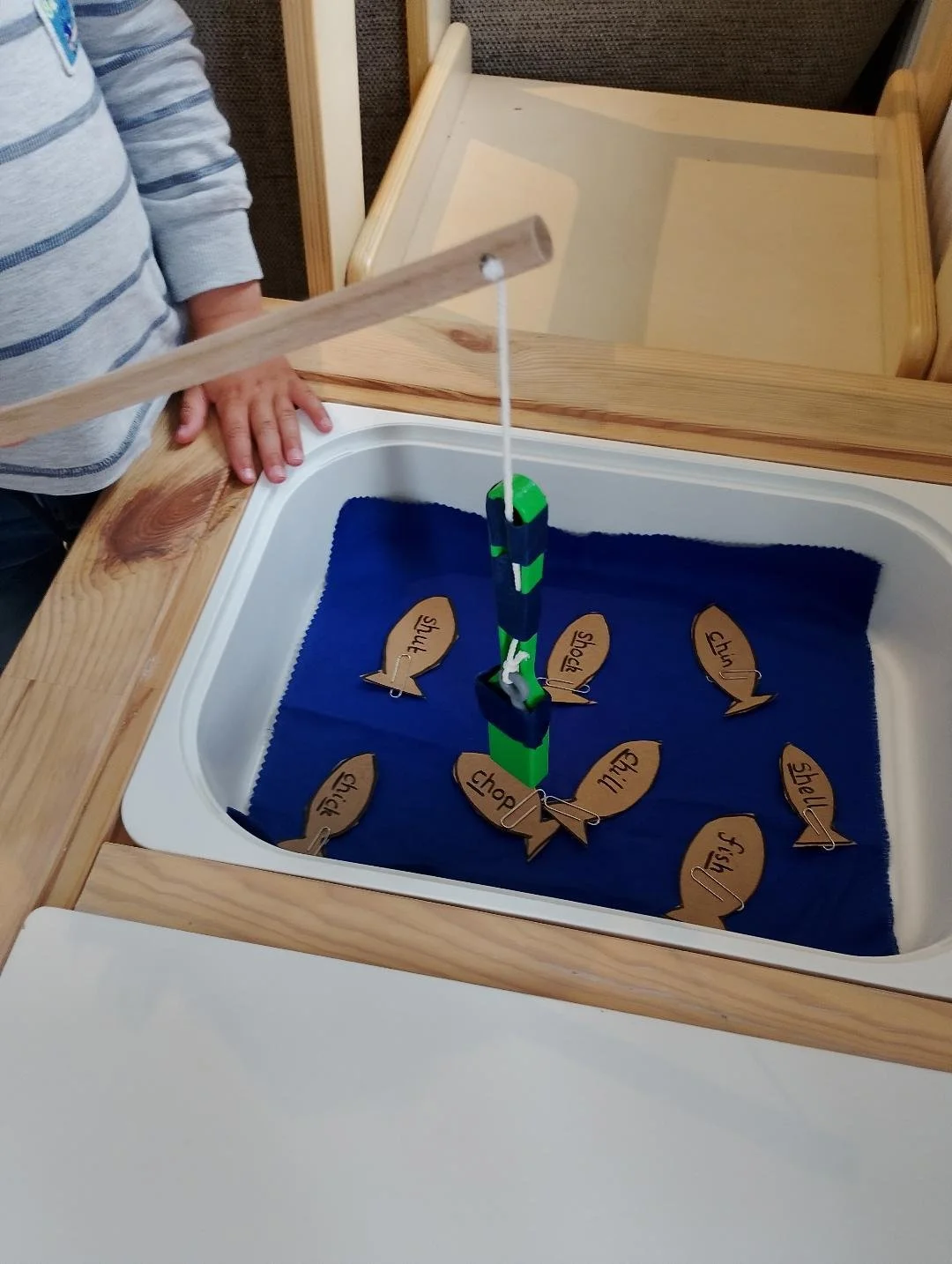
Word Fishing Write a handful of CVC words on paper fish and scatter them on the floor or in a shallow box. Your child catches one with a toy fishing rod or a magnet on a string, then sounds it out and blends it together to keep it. It's a playful, engaging way to get in the repetitive practice blending really needs, without it ever feeling like a chore.
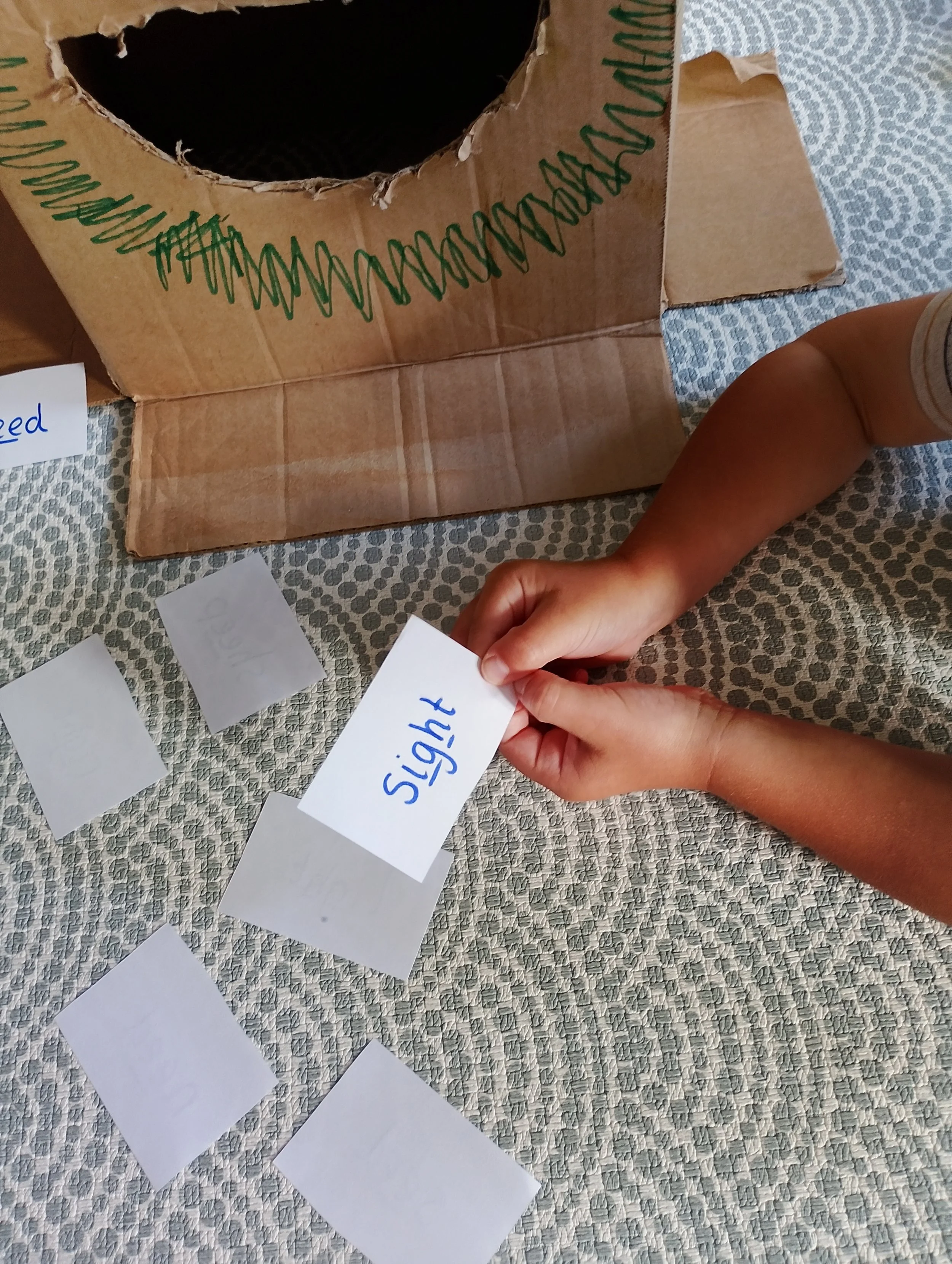
Feed the Monster Draw a monster face on a box or a paper bag with a big open mouth cut out as the slot. Write CVC words on small cards. Your child reads each word aloud, sounding it out and blending it, then feeds it to the monster if they get it right. Give the monster a name and a silly voice. The sillier the monster, the more willing they are to keep going.
Both of these came from the Play Nest CVC Word Blending Activity Pack which provides 30 play-based activities to practise reading words.
The bottom line
If your child knows their sounds but words still aren't clicking, they don't need more time on the sounds, they need more blending practise. Give it a few weeks of playful repetition and you should see them blend with less thinking time and more confidence.