Sight Words: What They Are and How to Practise Them Through Play
Your child can sound out "cat" without a moment's hesitation. Then they hit "the" and stop dead. It's not that they've forgotten their phonics. It's that "the" was never going to play by phonics rules in the first place, and no amount of sounding it out slowly is going to change that.
This is one of the most common sticking points in early reading, and once you know what's actually going on, it's a genuinely easy problem to solve.
What are sight words?
Phonics works brilliantly for words like cat, dog and run. But some of the most common words in English, words like ‘the’, ‘said’, ‘because’ and ‘where’, don't follow regular phonics patterns and are difficult to sound out reliably. These are sight words, also known as tricky words.
The trick is to look at the whole word together, spot the one part that breaks the pattern, and focus your child's attention there. Everything else in the word can usually still be sounded out as normal. In "said," for example, the s and the d behave exactly as expected. It's just that ai in the middle that doesn't play by the rules.
Here's why it's worth the effort. Take a sentence like "I sat on the mat." Your child already has the phonics for sat, on and mat. Add just two sight words, I and the, and suddenly they're reading a full sentence. That's real reading, and it tends to happen sooner than most parents expect.
Once you've spotted the tricky part, practice takes over
Spotting the tricky part together is the first step, and it only takes a moment. After that, the job is practise, not teaching. This is where flashcards, repeat after me, and testing the same ten words over and over tend to creep in. It works, technically, but it's the kind of practice a lot of children start to dread.
The alternative is playful activities built for exactly this kind of repetition, ones where your child is reading the word ten or twenty times without ever feeling like they're being tested.
Three ways to practise through play
Hopscotch
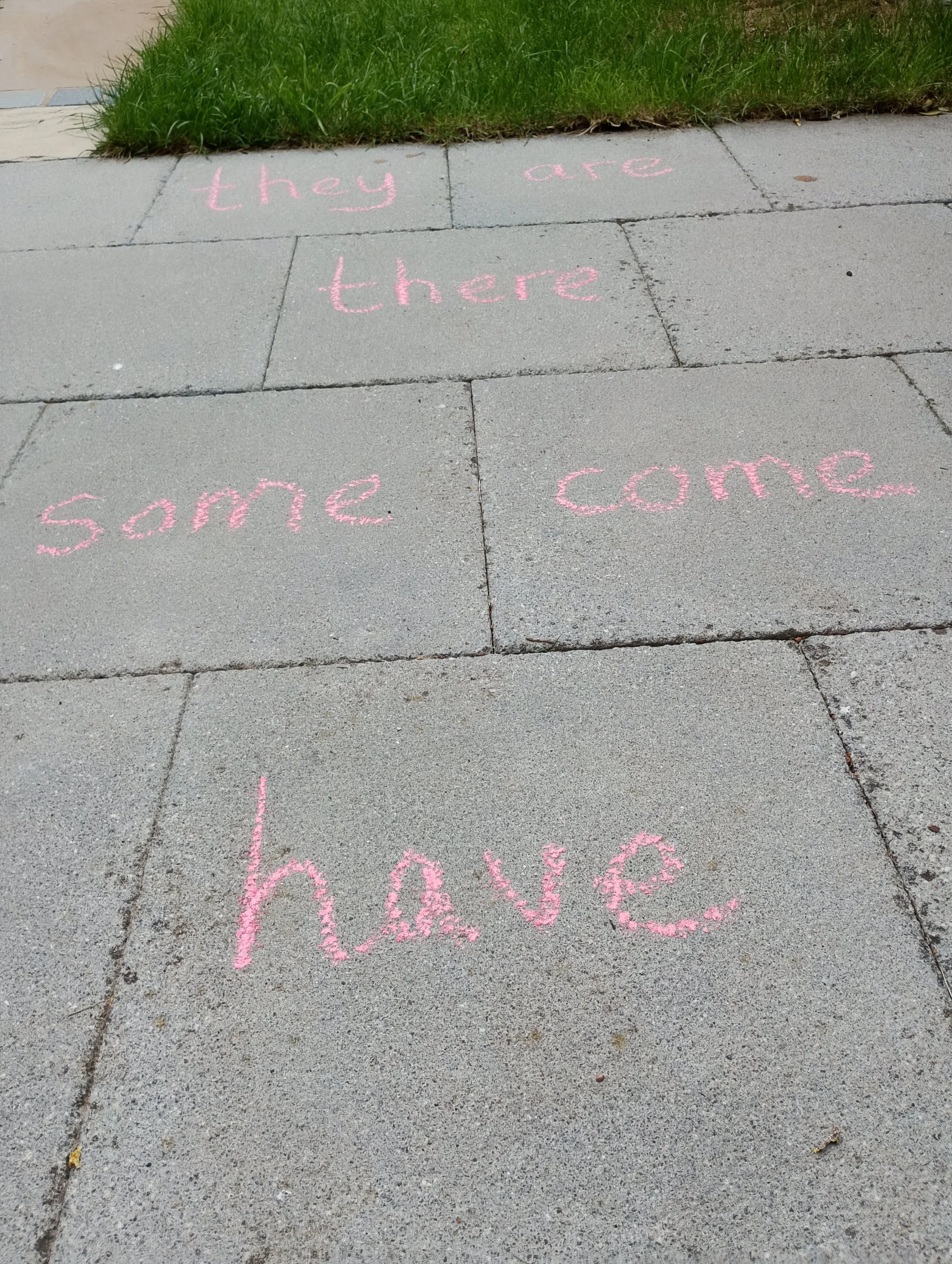
Draw a hopscotch grid with chalk outside, or paper squares inside on a rainy day. Write a sight word in each square. Your child hops through the grid, reading each word aloud as they land. Rearrange the squares and go again, a new layout keeps it fresh and stops guessing by memory. Or say a word for them to find and hop to. You could take it in turns and let them call a word for you to hop to. Children often like taking on this lead role and they are still doing the reading!
Stepping Stones
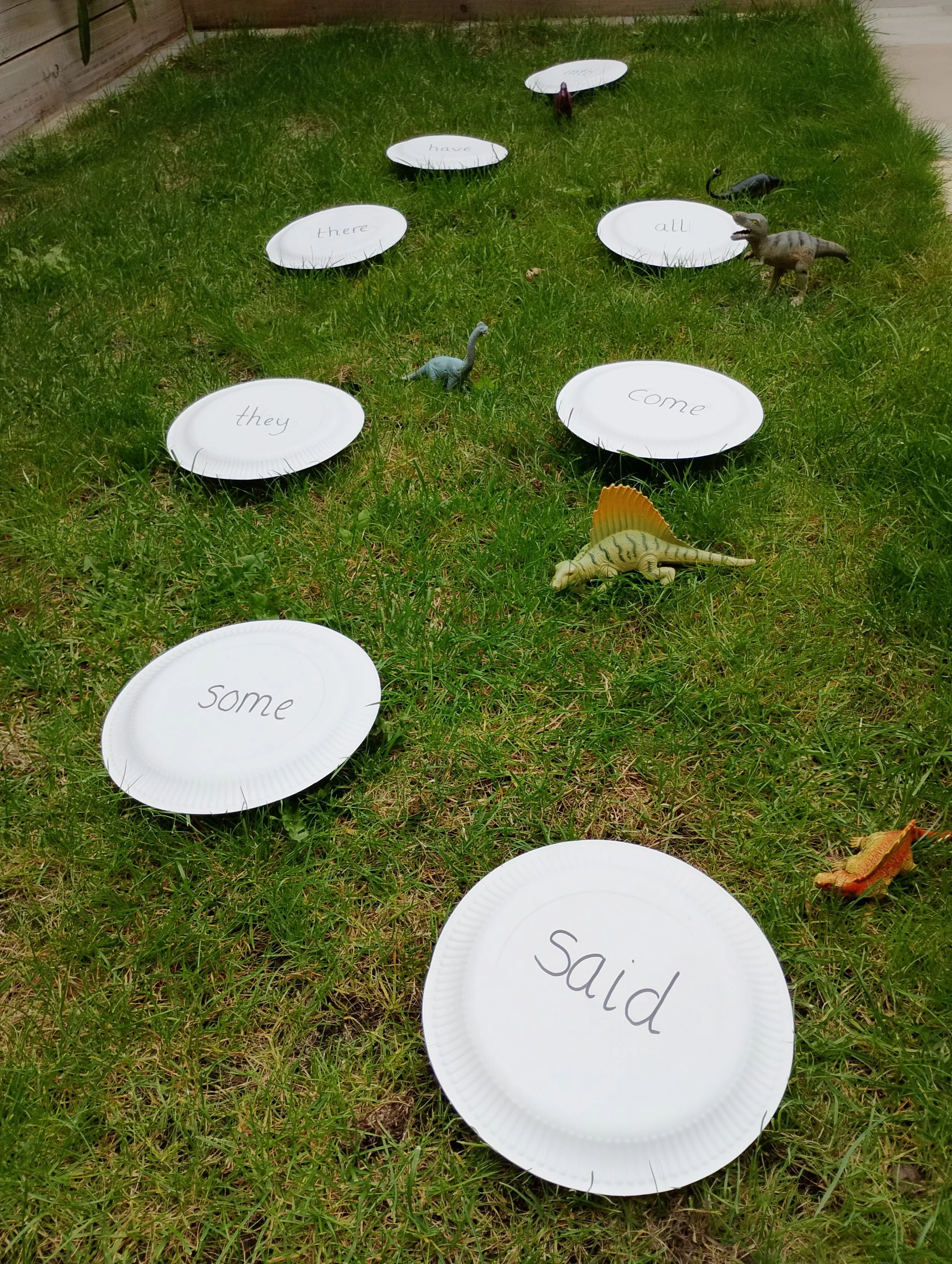
Lay sight word cards in a line across the floor like stepping stones. Your child steps from card to card, reading each word aloud as they go. Shuffle the order and repeat, so the same words come round again without ever feeling repetitive. Add a bit of fun by telling a story about crossing shark infested waters or adding in some obstacles along the way.
Shaving Foam Writing
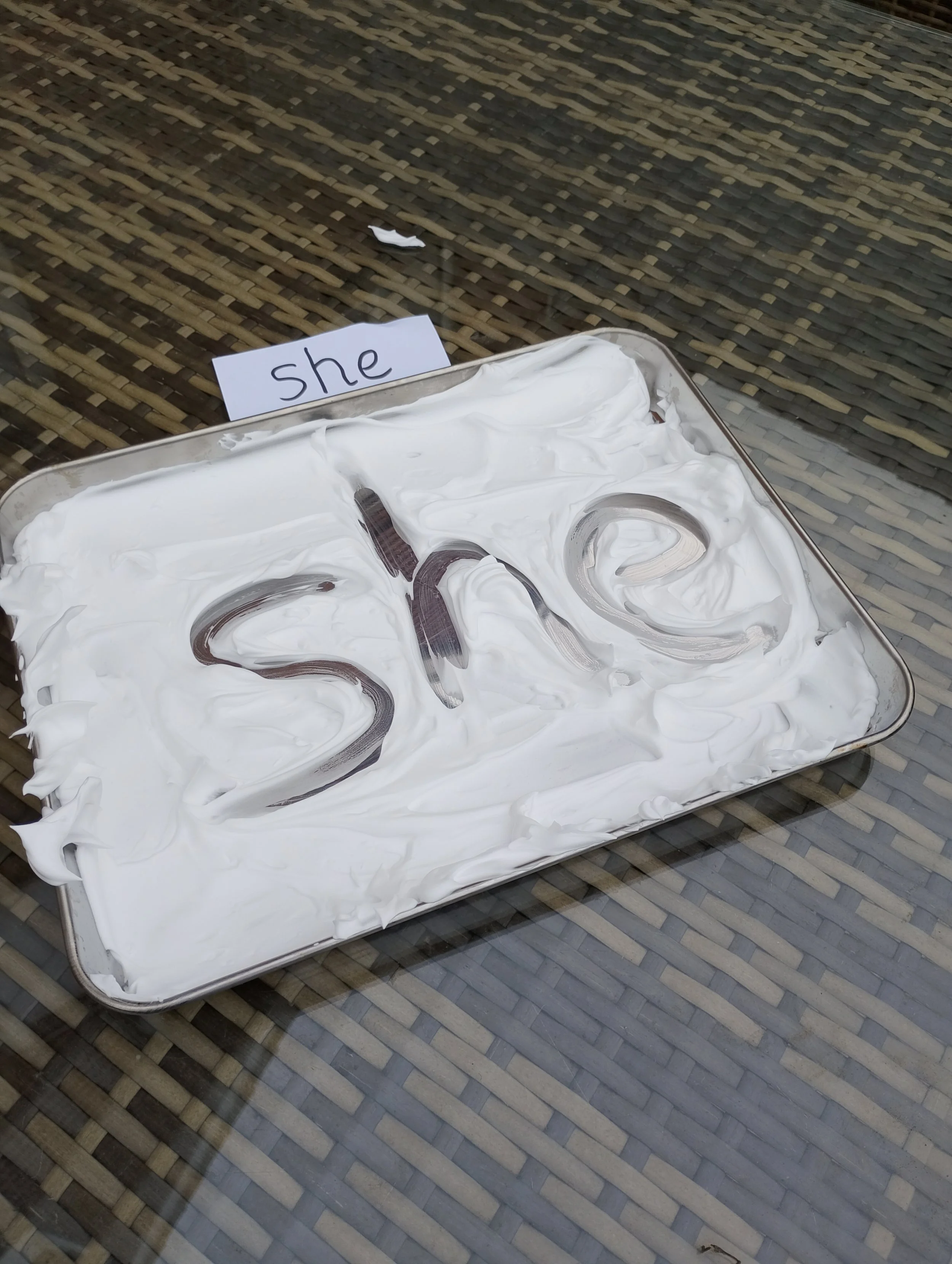
Spread a thin layer of shaving foam on a tray. Call out a sight word and your child writes it in the foam with a finger, saying it aloud when they've finished. Smooth it flat and move on to the next word. It's messy, it's memorable, and does something flashcards never quite manage.
All three are from the Play Nest Sight Words Activity Pack. 30 activities built entirely around a play-based approach.
The bottom line
Start with three to five words, spot the tricky part in each one together, then play with them until they feel secure. Little and often beats one long practice session every time, and a child who's having fun will ask to play again tomorrow without you even suggesting it.