
You're Doing Enough (You Don't Need a Curriculum to Prove It)
There's a moment most parents supporting home learning hit sooner or later. You see another family's colour coded timetable, or a beautifully laid out learning tray, and a small voice creeps in. Should I be doing more than this?
If that's you today, here's the honest answer. You're probably already doing enough. You just don't always recognise it as learning, because it doesn't look like school.
Where the pressure actually comes from
It rarely comes from your child. Most little ones are perfectly happy stacking cups, chasing the dog round the garden, or asking the same question about diggers for the fortieth time. The pressure tends to come from comparison. A friend's update, an app tracking milestones, a school newsletter listing what the class covered this term.
None of that is a true measure of your child, or of you. It's just one version of "enough," dressed up as the only version.
Learning doesn't need a plan to count
A lot of the pressure around home learning comes from thinking it has to look structured to be working. A timetable. A workbook. A tick list of topics covered by Friday.
But some of the richest learning happens without any of that. Counting stairs on the way to bed. Spotting letters on a cereal box. Sorting socks into pairs. Talking about why the ice cube melted. None of it needs planning, and all of it counts.
Play is more powerful than it looks
Watch a child lining up cars by size, or arguing that four biscuits is more than five smaller ones, and it's easy to see it as just play. It isn't just play. That's early maths reasoning happening in real time. A pretend shop is reading, writing and number all folded into one game. A den built from cushions is problem solving, planning and a fair bit of negotiation.
You don't need to name any of this out loud for it to count. The learning is happening whether or not it gets labelled.
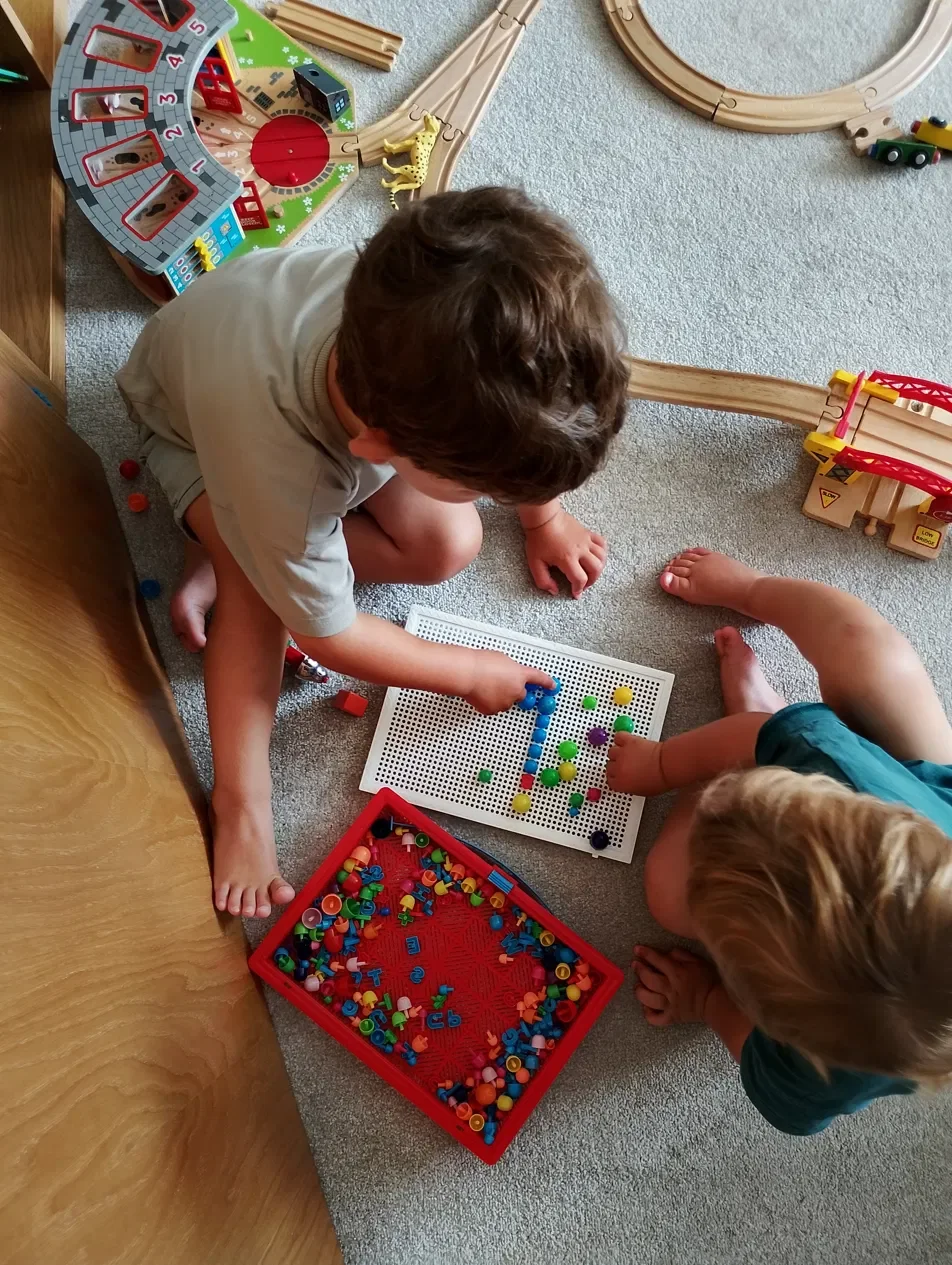
What "enough" actually looks like at this age
At this stage, the goal isn't coverage, it's confidence. A child who feels safe to try, get things wrong, and try again is building something far more useful than a child who's memorised a list of facts too early.
So if today looked like reading one book, having a proper conversation over lunch, and twenty minutes of building a wonky tower together, that's not a light day. That's a full one.
On the days that don't feel like enough
Some days genuinely are harder. Everyone's tired, patience is thin, and the only learning that happens is your child working out how to negotiate five more minutes of screen time. That's fine too. Home learning isn't a streak to keep going, it's something you can pick back up tomorrow with no damage done.
Consistency over time matters far more than any single day. One quiet day doesn't undo a week of talking, playing and noticing together.
If you want a little structure, without the pressure
Some parents feel calmer with a bit of shape to the week, and that's completely fine too. If a simple activity now and then helps you feel steady rather than stretched, that's exactly what the Play Nest activity packs are designed for. Something ready to reach for on the busier days, not another job to add to the list.
The bottom line
You don't need a curriculum, a timetable, or a Pinterest worthy set up to be doing enough for your child. You need moments of attention, a lot of play, and the odd simple idea to lean on when you're short on time or ideas. If that's what today looked like, you're doing exactly enough.
Simple, play based guides for reading and writing, with everyday ideas you can start using today. No pressure, no worksheets, just play.