
How to Turn Train Obsession Into Reading, Writing and Maths Practice
If your living room floor is permanently taken over by train track, you'll know exactly what I mean. My little one is completely obsessed with trains, and for a while I found myself fighting that obsession every time I wanted to sit him down for some reading or maths practice. Then I stopped fighting it and started using it instead.
Why this works better than pulling them away from play
Here's the thing about young children and learning: they don't learn best when we ask them to stop playing and switch into "learning mode." They learn best when the learning happens inside the play they're already choosing to do, for hours, without any encouragement from us at all.
That's not a shortcut or a trick, it's actually how children this age are wired. When your child is deep in train play, their brain is already switched on, engaged and motivated. Add a word to read, a clue to work out or a sum to solve into that same play, and you're not interrupting the fun, you're building the learning straight into it. Nothing feels like a lesson, nothing feels like a test, and there's no battle to get them to sit down and focus.
Some ideas we’ve been using at home
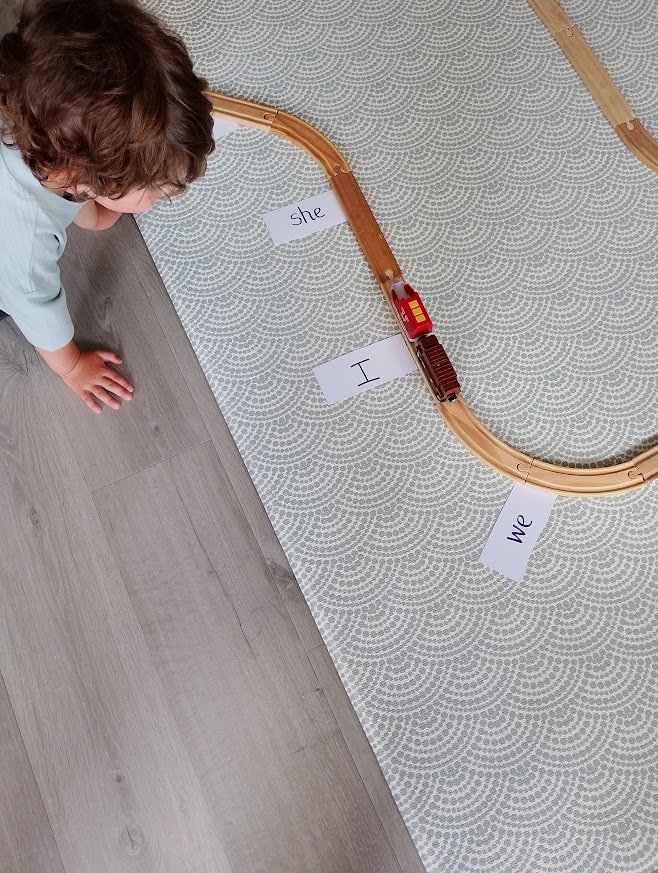
Sight Word Stations Place sight word cards along the train track, one word per stop. As the train pulls into each station, your child reads the word out loud before it's allowed to carry on to the next one. Start with just a few words your child already knows, plus one new one you can read together, and build up slowly from there.
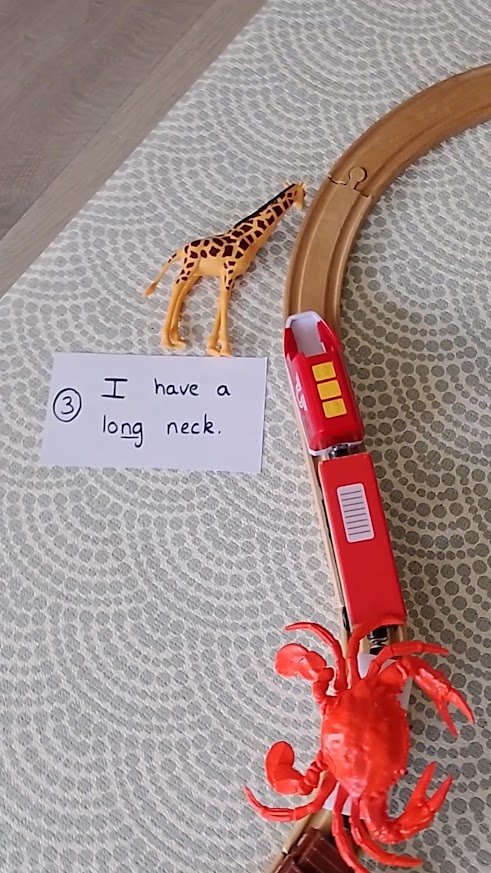
Station Clues Line up some toy animals, teddies or figures at the main station. Write a simple clue for each one and place them at the other stations, for example "I have a long neck." Your child reads the clue, works out which passenger it describes, and collects them from the main station. It turns straightforward reading into a proper little puzzle.
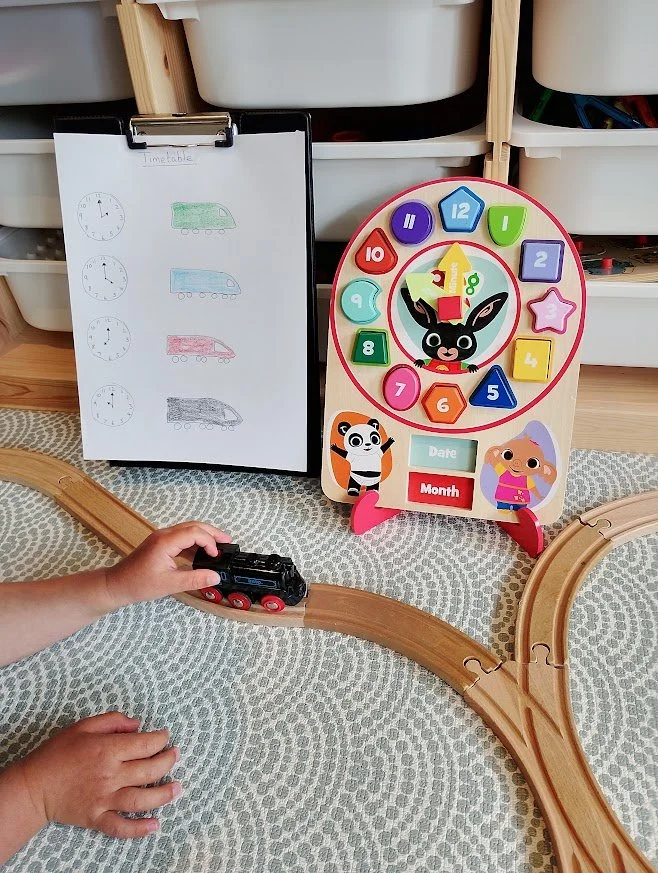
Timetable Make a simple paper timetable showing what time different coloured trains leave, alongside a few drawn clock faces. Start with o'clock, then move on to half past, quarter past and quarter to. Call out a time and your child checks the timetable to work out which train is due to leave next.
Build the Word Place a handful of letter cards around the track. Say a word out loud, and your child has to collect the right letters and put them in order to spell it. This one's been brilliant for us because my son isn't ready to write yet, but this still lets him practise segmenting, breaking a word down into its separate sounds, without needing a pencil at all.
The bottom line
You don't need to compete with your child's favourite obsession to fit in some learning. Whatever they can't get enough of right now, trains, dinosaurs, superheroes, can very often become the way in rather than the thing standing in the way.
15 play-based activities covering reading, writing and maths, built entirely around the toy train and track your child already loves. Kindergarten and EYFS level, low prep, low pressure.
Play Nest Learning creates play-based activity packs that help children aged 3–6 (ish) learn through play. Because home learning should feel joyful, not stressful.